"Nazi Refugees’ Son Explores Complex Feelings"

The headline–“Nazi Refugees’ Son Explores Complex Feelings”–caught my attention immediately. Because, you see, my father is the only son of Nazi refugees, and I’ve always suspected he has some rather complex feelings about that fact.

But the story beneath the headline, which appeared in The New York Times this week, was not about my father. Rather, it was about children of Jewish refugees from Central Europe who grew up in Kew Gardens, Queens, in the 1940s and 1950s (my dad grew up in Manhattan and Brooklyn). And it was about “Last Stop Kew Gardens,” a semiautobiographical documentary about this cohort. A film I will certainly be looking for.

Notes from Around the Web: Third Gaza Edition

Late last week, Nextbook collected and compiled a number of links representing an array of takes on what has been happening in Gaza. Check them out here.
==========
Have you heard about Jon Stewart’s deplorable indictment of Israel? Jon, please, don’t do this to me. Must I abandon The Daily Show, too? Please consider the well-expressed response of Andrew Silow-Carroll. Or are you too busy, Jon (born Jonathan Stewart Leibowitz), savoring the praise you’ve received (says the San Francisco Chronicle) from the Muslim Public Affairs Council?
==========
Thank you, David Harris, for expressing, among other essential truths the world should remember when hearing some of the most twisted accusations currently being made against Israel–accusations and descriptions invoking Holocaust “vocabulary”–those embedded here:

What about all the clergy, cartoonists, protesters, and politicians so concerned about the human rights of those in Gaza? Have they ever uttered a peep while those 10,000 rockets, missiles, and mortars were raining down on southern Israel? Did they ever take to the streets to support the human rights of Israelis? Did they ever read the Hamas Charter and hear the echoes of Mein Kampf and the Protocols of the Elders of Zion, two European books that helped to condemn Jews to their death?

Did they ever put two and two together and ask what would happen if Hamas married its annihilationist goals with ever more advanced weaponry? And did it occur to them that, yes, nearly six million Israeli Jews would be in the crosshairs?

For the full Harris post, click here.

Woman of Letters and Other Goings-on at the Museum of Jewish Heritage

In the current (November) issue of The Writer magazine, I’ve contributed a short news item on Woman of Letters: Irène Némirovsky and Suite Française, an exhibition at New York’s Museum of Jewish Heritage-A Living Memorial to the Holocaust. Woman of Letters runs into March 2009, but if you can’t get to the Museum to see it, you can still check it out online.

Plenty of events are being planned in conjunction with this exhibition, among them a discussion of “Jews in Vichy France” (featuring scholars Robert Paxton and Michael Marrus) and another session on “Irène Némirovsky and the Jewish Question,” with my own former professor, Susan Suleiman, and The New Republic‘s Ruth Franklin. Check out these sessions, and other events planned for this fall at the Museum, right here.

(I won’t be blogging on Yom Kippur. See you back here in a few days.)

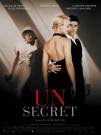
Sharing "Un Secret"

Last weekend I saw an extraordinary film: A Secret (“Un Secret“), based on the autobiographical French novel by Philippe Grimbert.

The New York Times review got it right:

To describe “A Secret” as a Holocaust movie would be perfectly accurate but also somewhat misleading. Its chronology is complex and elusive. It shifts from the immediate postwar years into the 1980s…and then back into the anxiety and panic of impending and actual war. In those days Maxime spelled his last name Grinberg, he was married to a woman named Hannah (Ludivine Sagnier) and the two of them occupied the stolid center of a large and complicated extended Jewish family.

That family, as it heads toward catastrophe, is as much the setting of the story as its subject, and their fate as Jews under Nazi occupation is entangled in murky, sticky domestic issues of jealousy, betrayal and desire. An erotic spark ignites the first time Maxime and Tania meet — the day of his wedding to Hannah — and it causes plenty of guilt and tension. But it might have been safely (if agonizingly) extinguished in more peaceful times….

What is most impressive about “A Secret” is the way Mr. Miller artfully and gently gestures toward such enormous themes without spelling them out. Nearly every melodramatic impulse has been suppressed in favor of a calm precision that serves both to intensify and delay the emotional impact of the film’s climactic disclosures.

There is so much more to say about this movie, and given my past studies in 20th century French history, I feel compelled to say it. But I also want to wait until I have the chance to discuss it with one of my mentors and friends to get his take (and to ask him if he agrees with me about one possible anachronism amid all the incredibly good historical detail).

The film is just becoming known here in the United States, where Grimbert will be meeting with American readers/audiences in the coming days. I’ve already ordered the original novel from amazon.fr (it has been published in English in the United States as Memory), and I’m looking forward to hearing what the author of this intense, and intensely sad, story has to say when I attend this event at the Mercantile Library Center for Fiction in Manhattan. Keep an eye out for any Grimbert appearances near you. And go see that movie. ASAP.